Wood finishing starts with knowing what is already on the surface. TulsaSoftWash inspects your fence or deck, prepares the wood, allows for drying, and selects an application approach for the project in front of us.
Fence boards may be weathered, previously stained, painted, damp, or carrying surface buildup. TulsaSoftWash starts by looking at those conditions instead of assuming every fence needs the same treatment.
Wood fence staining and fence painting can both be considered. Cleaning, sanding, drying, and the finish itself are chosen around the existing surface and the surrounding property.
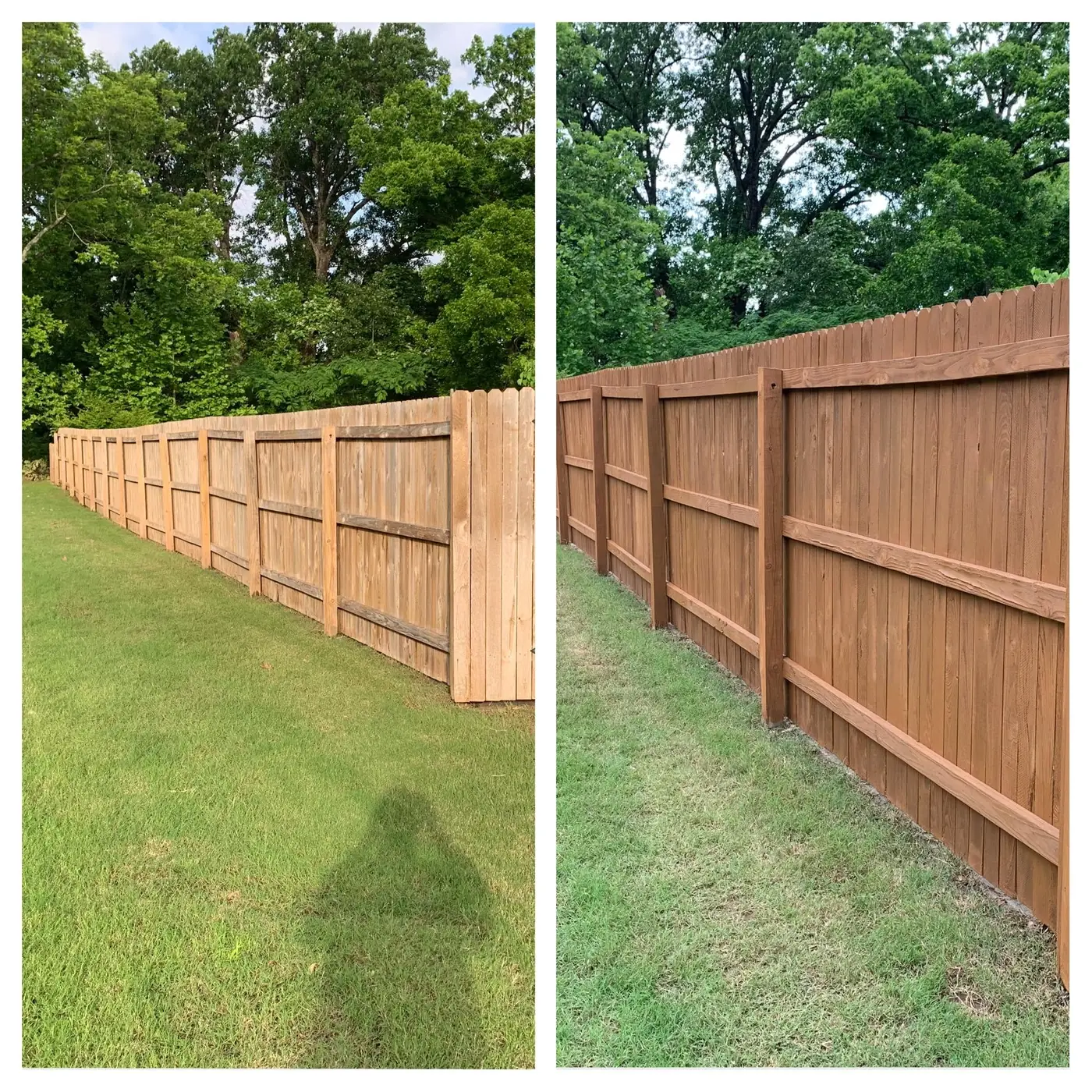
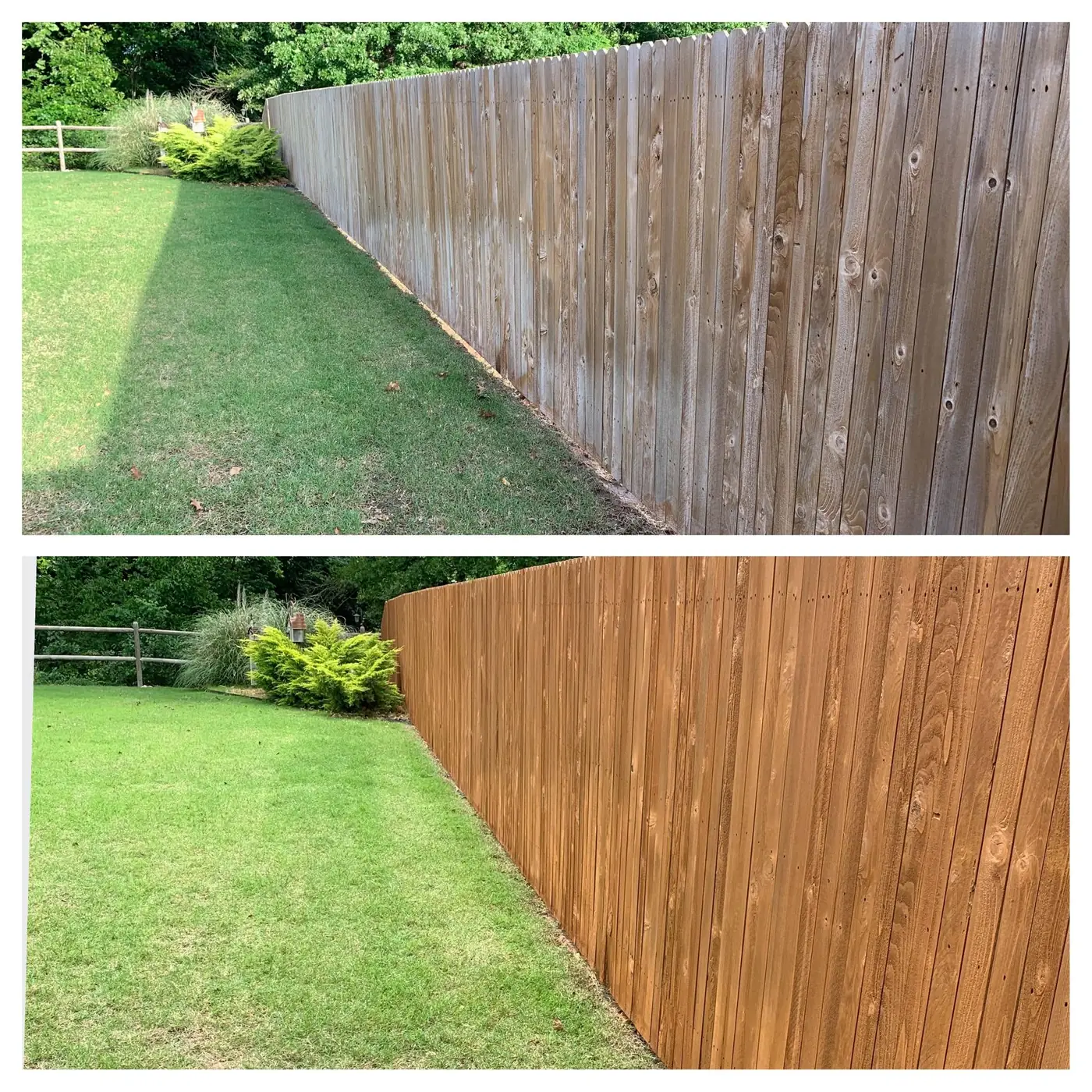
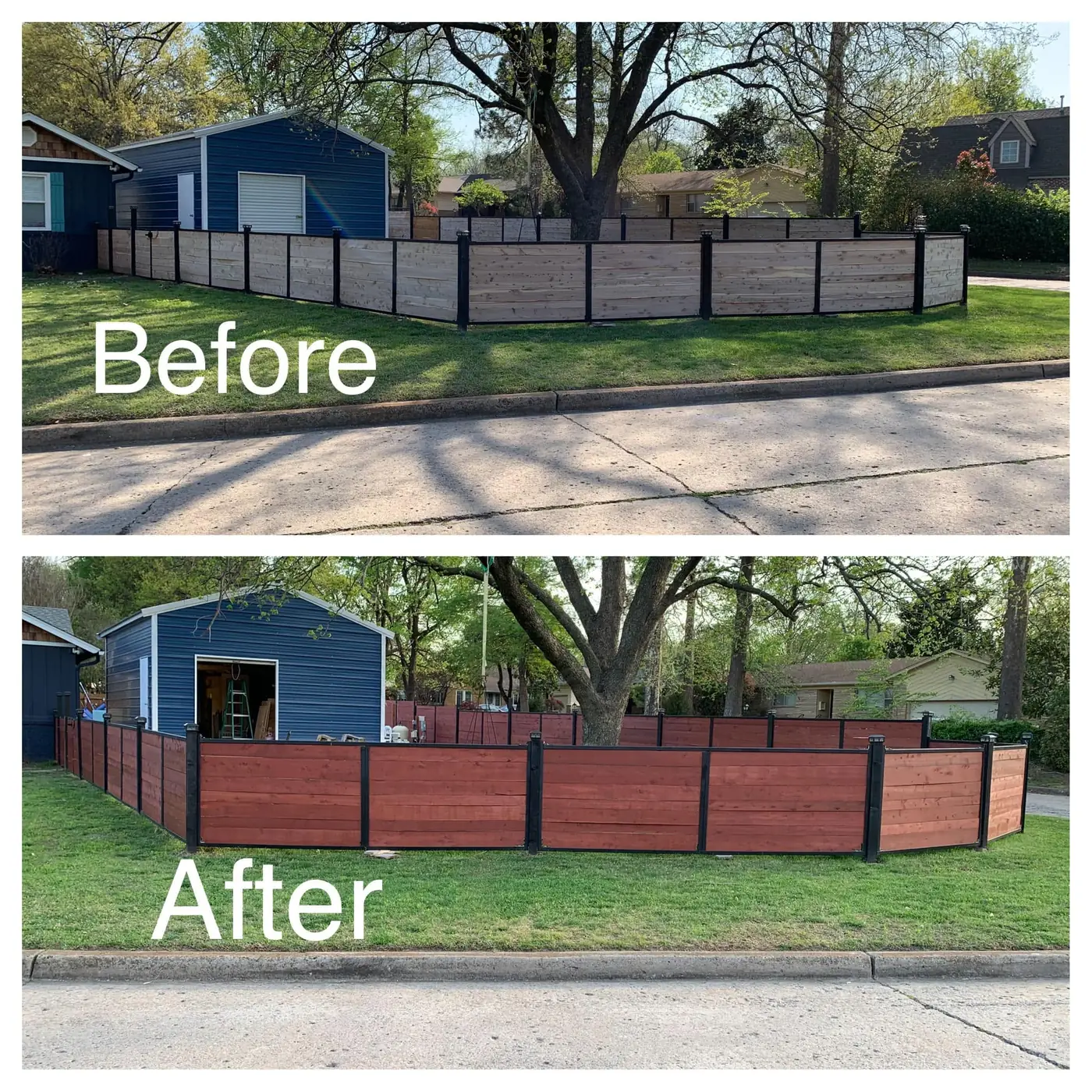
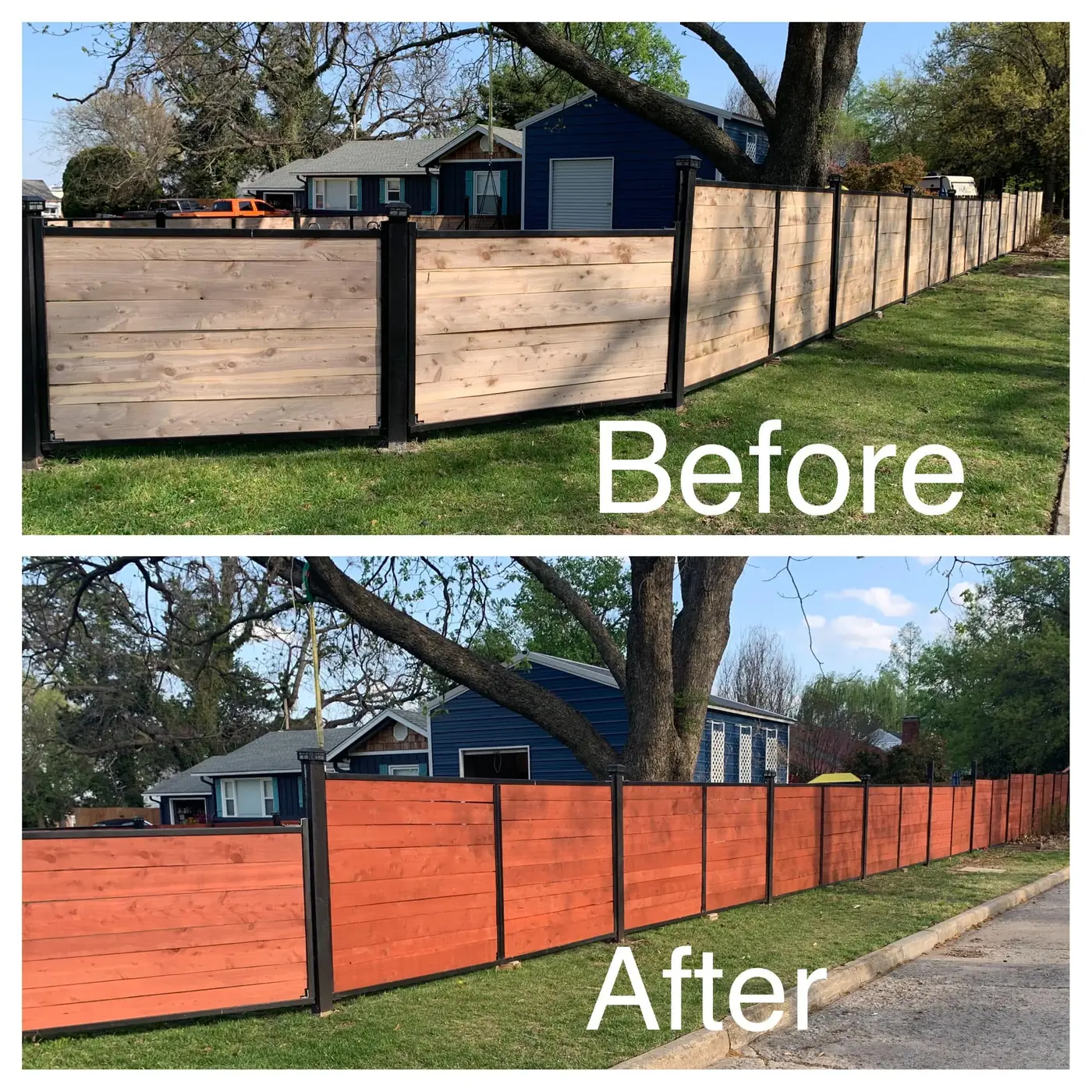
Weathered wood fence · before and afterPrivacy fence project · before and after
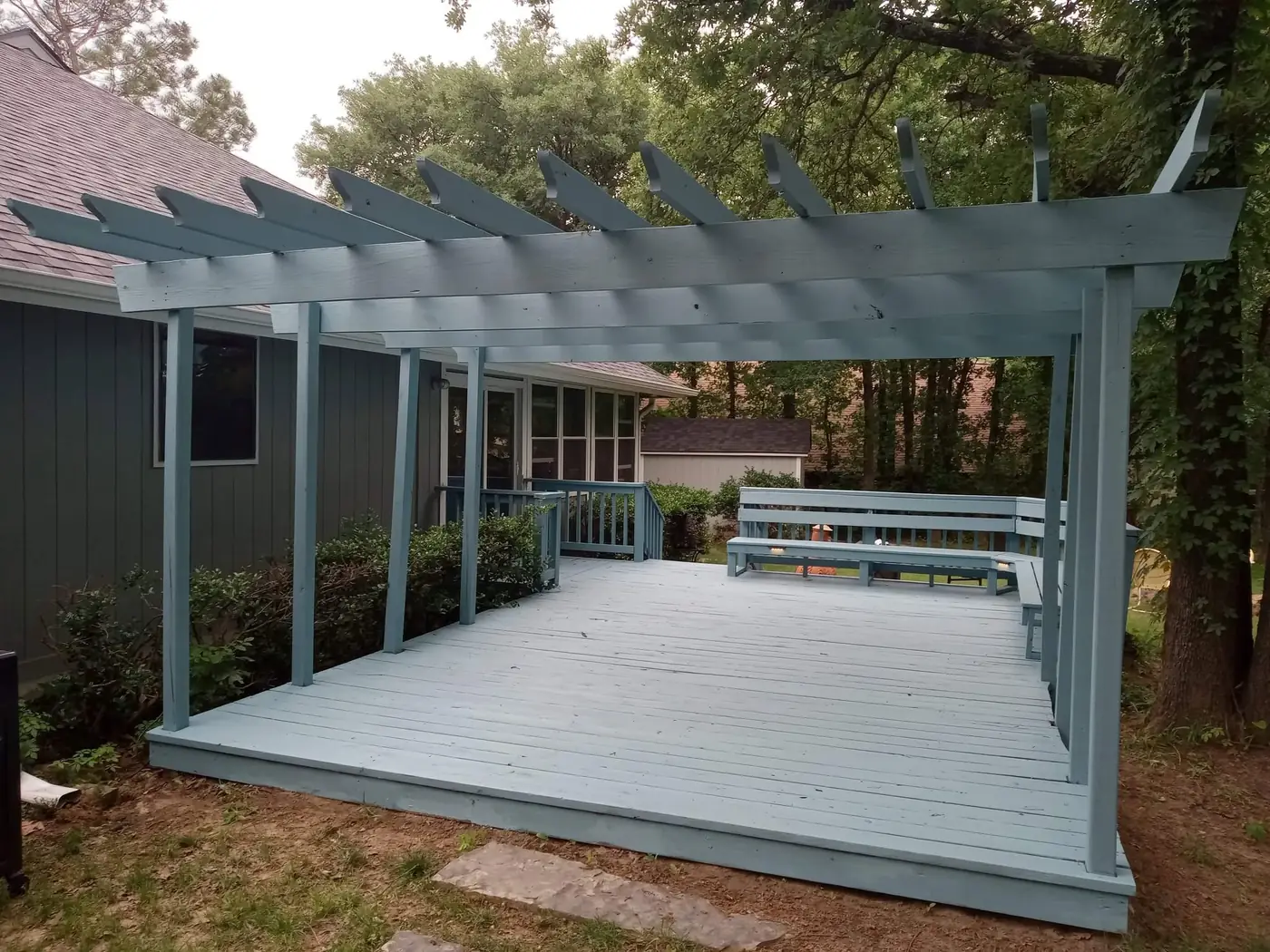
Deck staining and painting
Deck refinishing is part finish, part timing.
A deck can have an old coating, open grain, weather-related wear, or areas that need more preparation than others. TulsaSoftWash evaluates those details before discussing deck staining or deck painting.
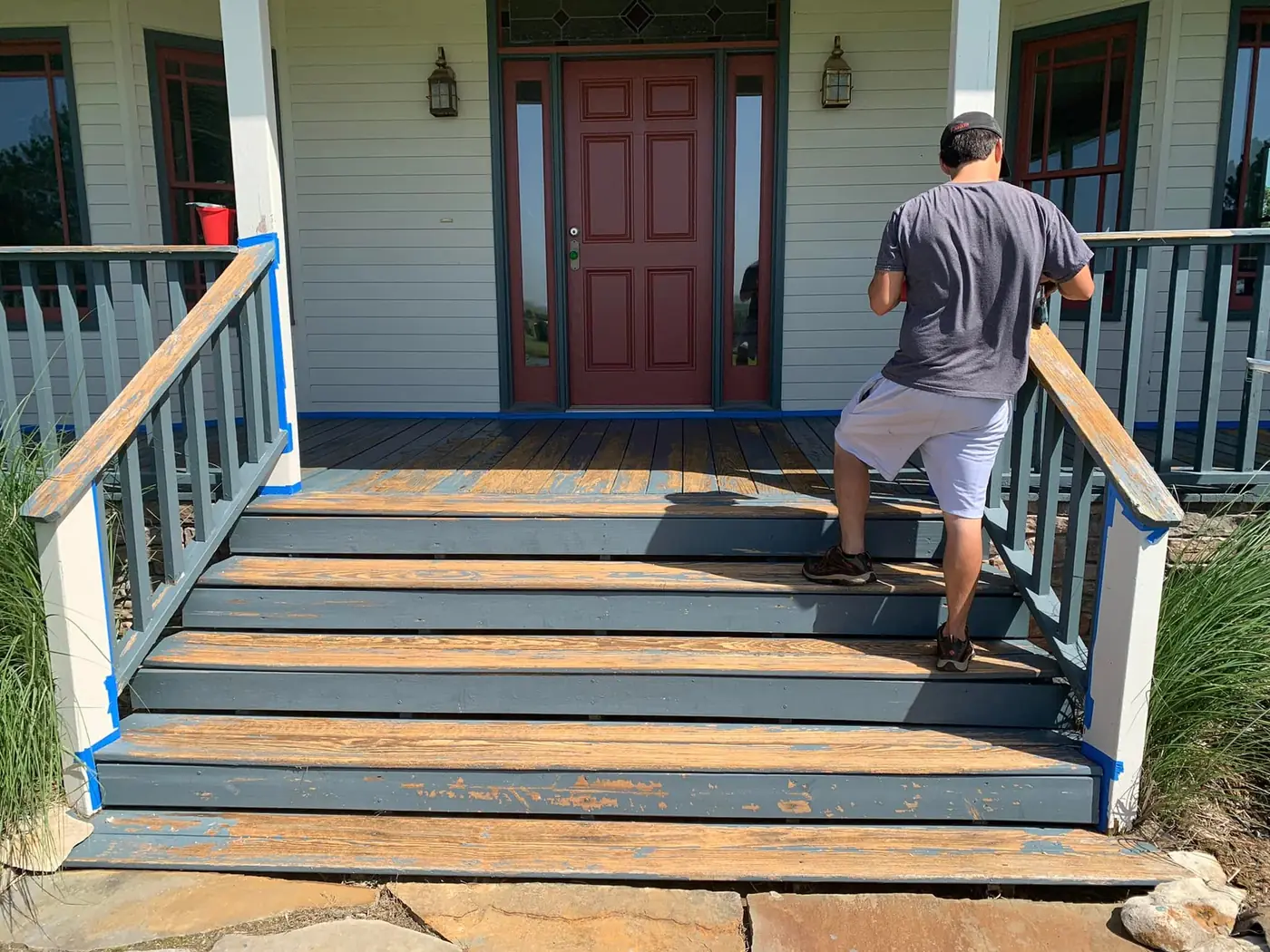
For painted decks, loose or failing paint may need pressure washing and/or sanding before a new coating. Previously stained decks normally need cleaning before they are restained.
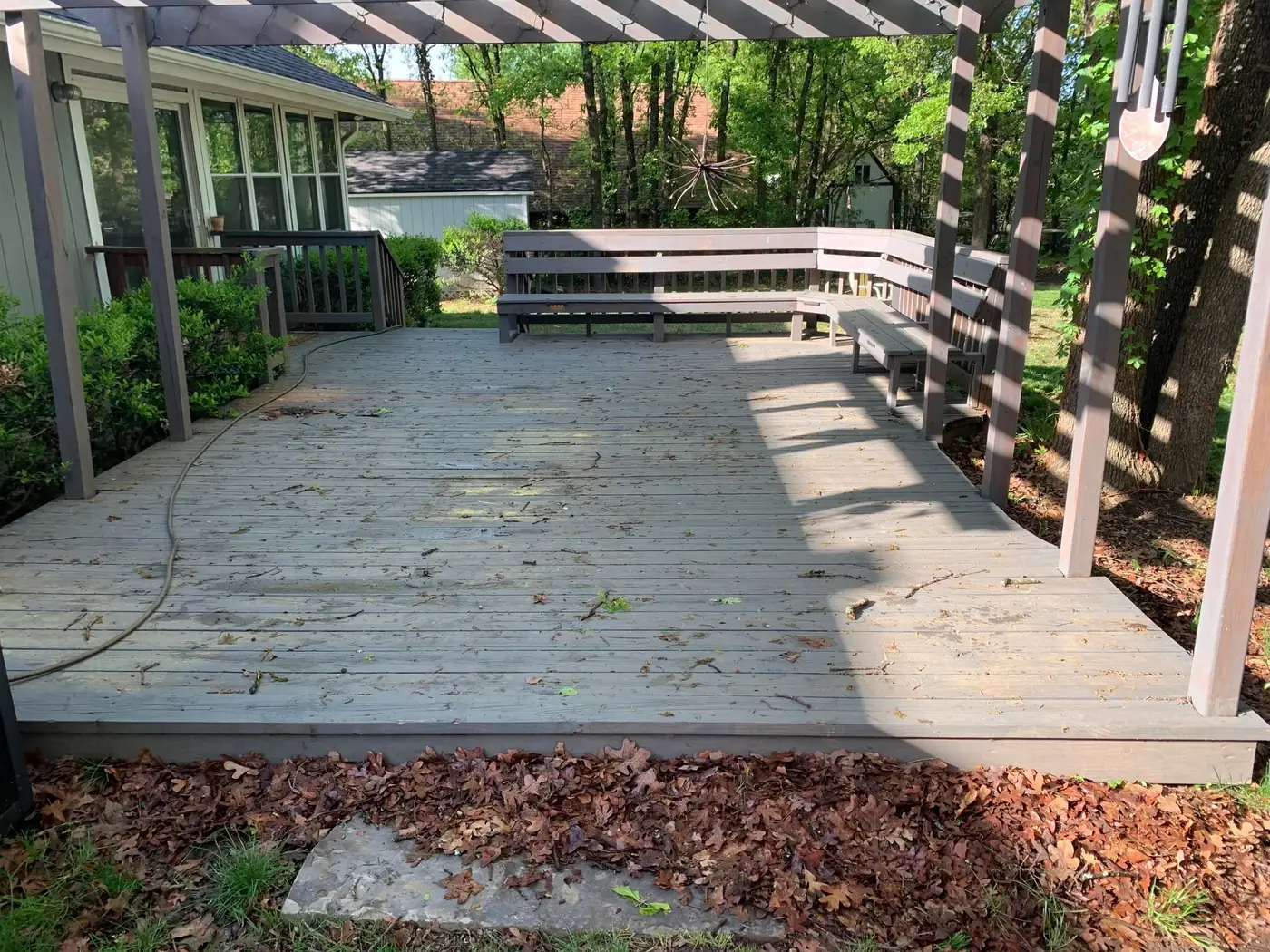
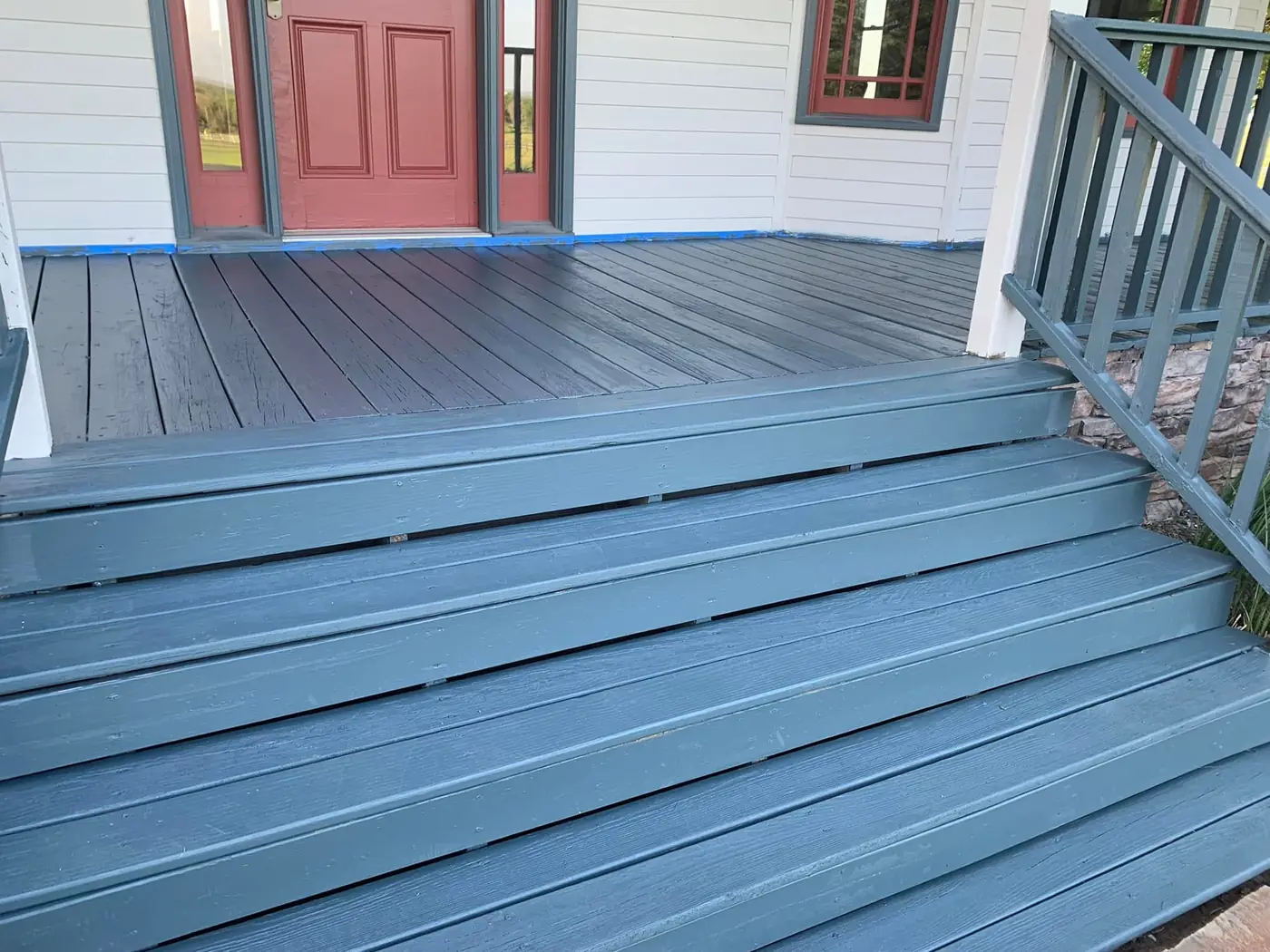
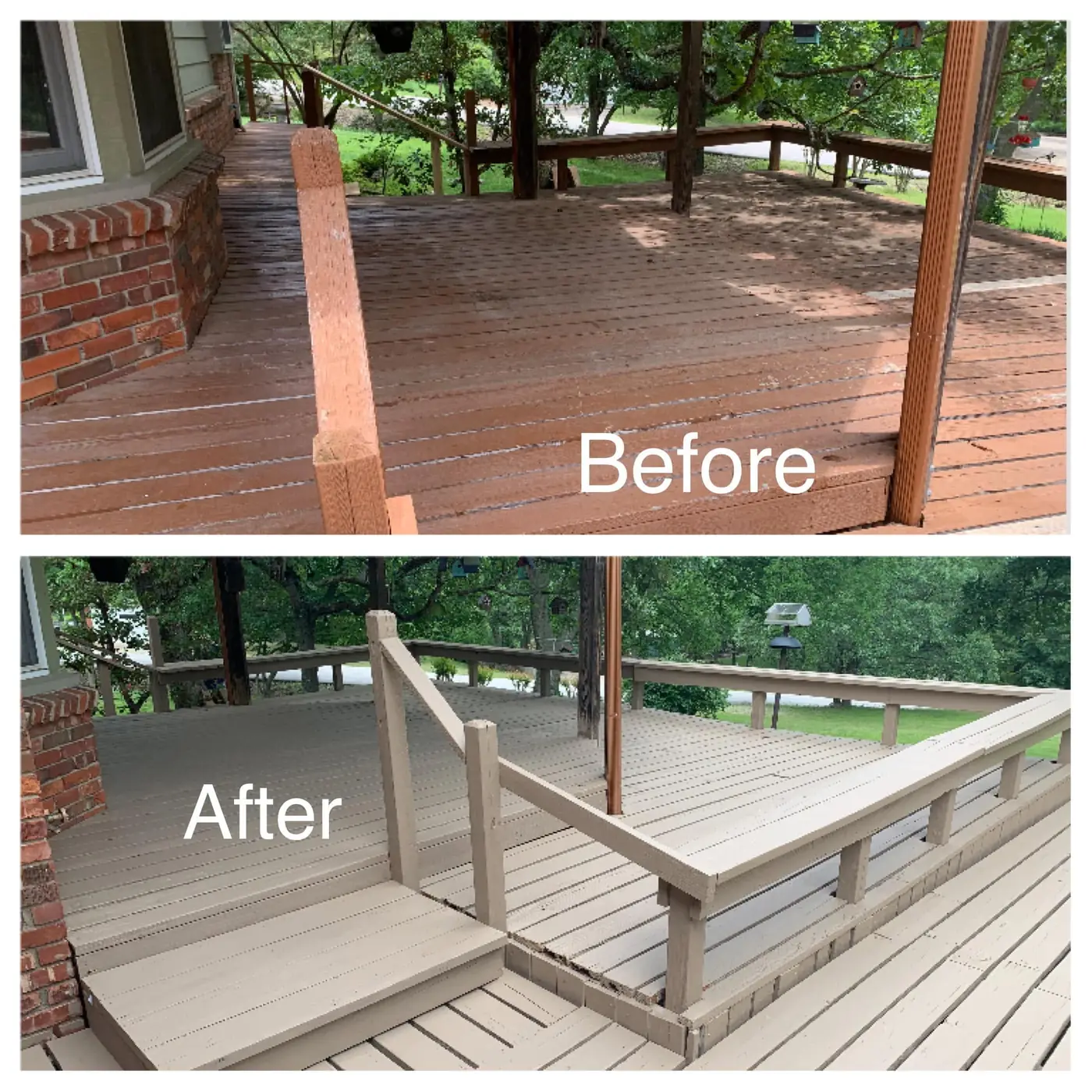
Painted deck · preparation requiredPainted deck · after painting
Start with the wood
01
Inspect the surface
Look at the wood's condition and identify what is currently on it.
02
Separate the coating question
Paint, stain, loose material, and bare or weathered wood can need different preparation.
03
Plan around the property
Surrounding surfaces and jobsite conditions are considered before cleaning and application.
04
Discuss the next stage
The finish and application method are selected after the wood is evaluated.
Inspection: what is already on the wood?
The existing surface sets the starting point.
TulsaSoftWash first inspects the fence or deck to determine its condition and what is currently on the wood. That answer informs whether the wood needs cleaning, whether existing paint may need pressure washing and/or sanding, and when the wood is ready for stain.
This is why a quote conversation may sound different for a painted deck than for a previously stained fence. Preparation is not a decorative extra; it is the work that makes the next decision clearer.
Why preparation matters
A finish can only respond to the surface underneath it.
Normal jobsite preparation is appropriate to the project. Supplies may include drop cloths, rags, brushes, rollers, appropriate cleanup materials, and thinner when appropriate for the coating or cleanup needs.
We consider nearby siding, concrete, landscaping, and other surrounding surfaces when preparing and applying paint or stain. The protection and cleanup approach is adjusted to the needs of each project.
Preparation in progress · not a finished result
Paint or stain?
The old coating changes the preparation.
There is no honest shortcut around looking at what is already on the wood. The next step depends on how that coating is holding and what the new finish needs from the surface.
Existing paint
Painted wood may require pressure washing and/or sanding to remove loose, deteriorated, or failing paint before applying a new coating. Preparation is evaluated for the surface; every trace of old paint is not promised to be completely removed.
Existing stain
Previously stained wood normally needs to be cleaned or pressure washed before it is restained. After washing, the wood needs adequate drying time before stain is applied.
Pressure washing before refinishing
Cleaning is a preparation step, not the finish.
Previously stained wood normally needs to be cleaned or pressure washed before it is restained. For painted wood, pressure washing and/or sanding may be needed to address loose, deteriorated, or failing paint before a new coating is applied.
After washing, stain is applied only after the wood has had adequate time to dry. The right preparation starts with an inspection of the existing coating and wood condition.
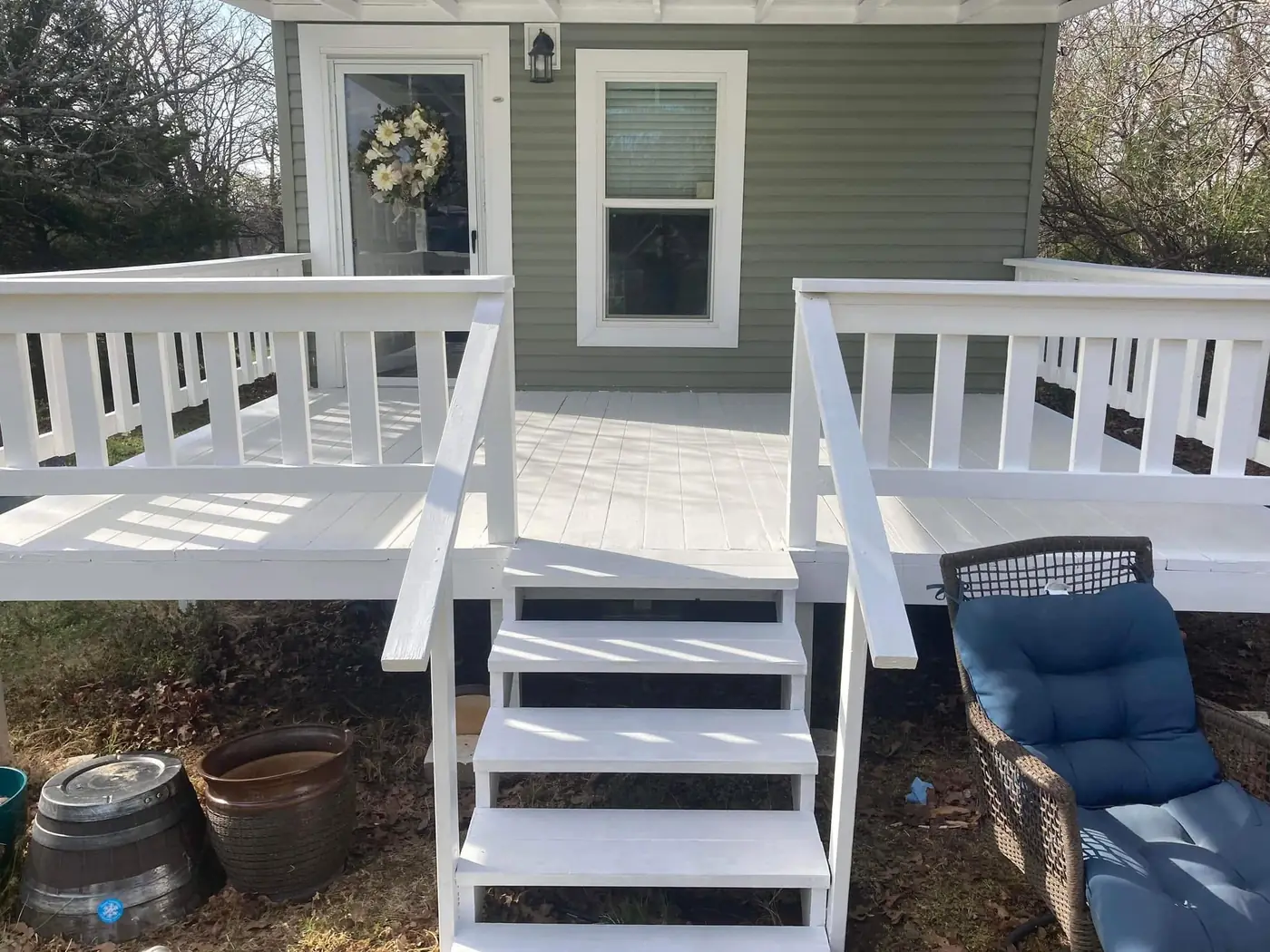
Finished painted deck and stairs · real project example
Before stain
01
Clean according to the existing coating
Previously stained wood normally needs cleaning before it is restained.
02
Let conditions do their part
The wood needs adequate drying time before stain is applied.
03
Check the surface again
Moisture, weather, wood condition, and project size can affect readiness.
04
Apply when ready
Stain is applied after the wood is sufficiently dry for the project.
Allowing wood to dry before staining
The calendar does not decide when wet wood is ready.
After washing, wood needs adequate drying time before stain is applied. A typical staining project may therefore span at least two days: preparation and cleaning, drying, then staining after the wood is sufficiently dry.
That is a project pattern, not an exact promise. Weather, wood condition, moisture, project size, existing coatings, and other conditions can change the schedule.
Is your wood ready for stain?
Readiness is a condition, not a date.
Fresh pressure-treated lumber should not automatically be stained immediately. If the wood is still too wet or not sufficiently weathered, stain may not penetrate properly.
TulsaSoftWash evaluates the lumber condition, moisture, weather exposure, environmental conditions, and the coating or product being used before recommending staining.
There is no universal waiting period for every new fence or deck.
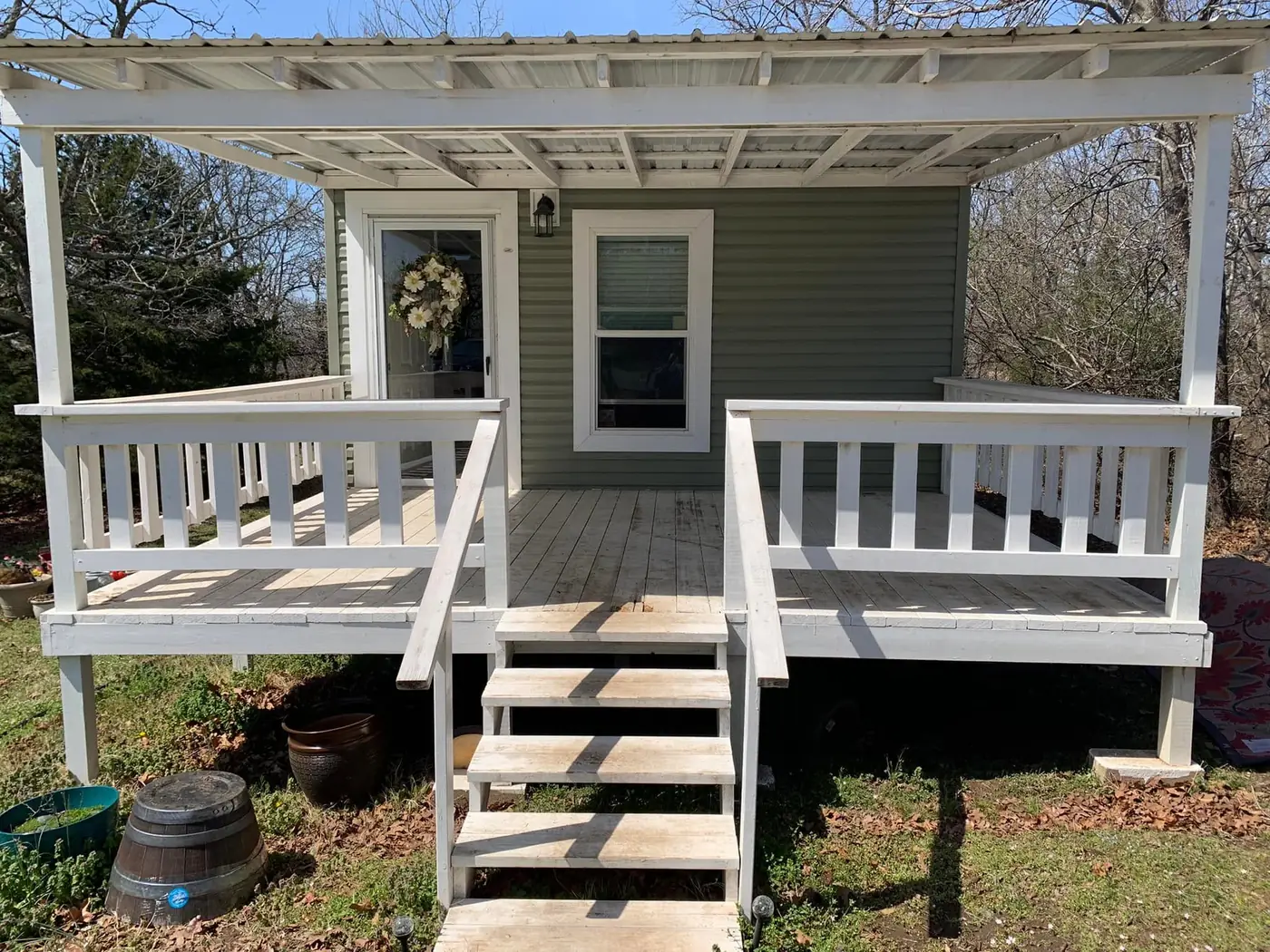
Wood porch and deck · before paintingWood porch and deck · after painting
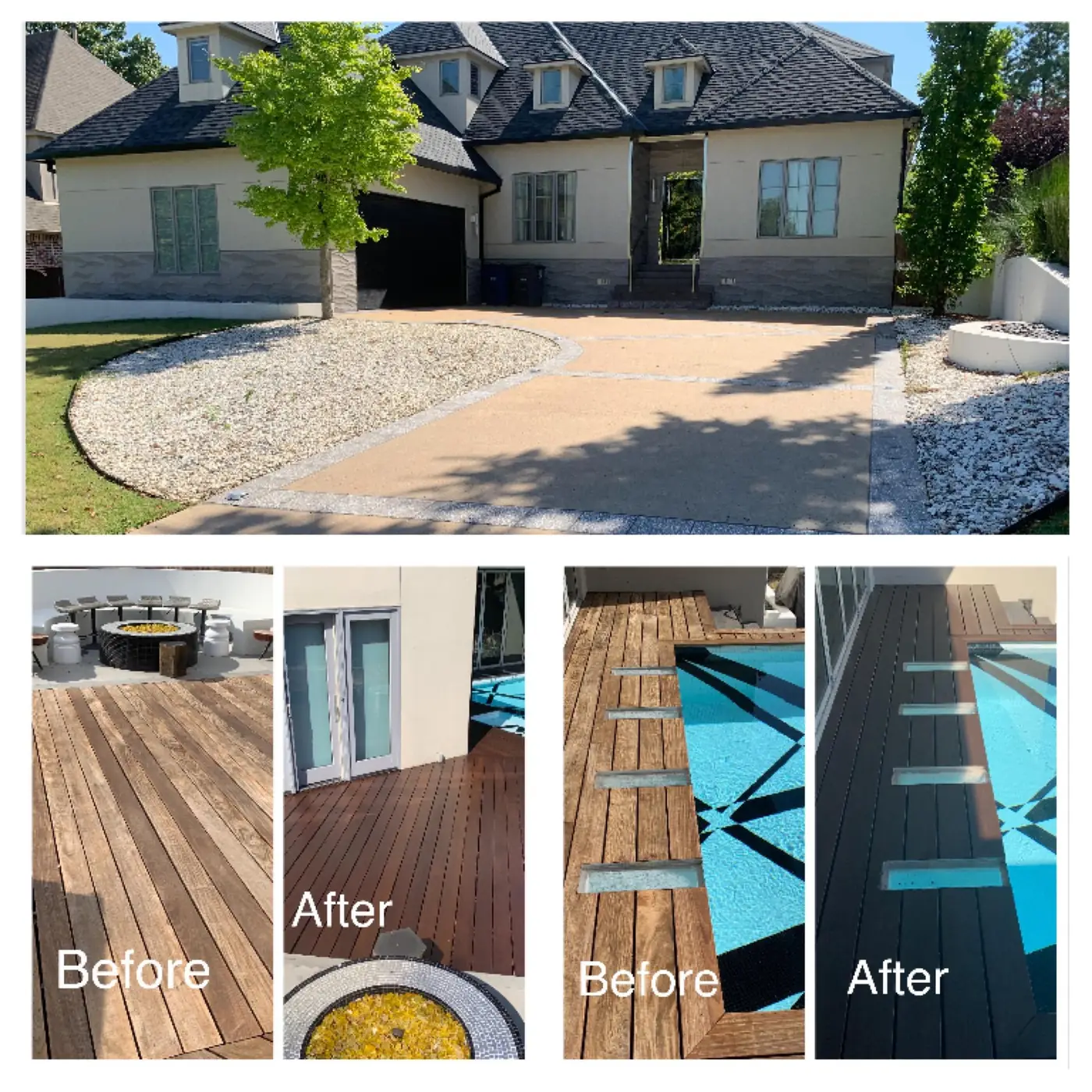
Pool deck · before and after
Brush, roll, or spray and back-roll
The application method follows the project.
Stain or paint may be brushed, rolled, or sprayed and then back-rolled. Sometimes brush or roller application makes more sense; sometimes spray application followed by back-rolling is more efficient or appropriate.
TulsaSoftWash selects the method based on the project and surrounding conditions. Spraying is not automatically better, and no single method is used on every job.
Brush
Roll
Spray + back-roll
Real TulsaSoftWash project results
Real Fence & Deck Projects
These are actual fence and deck staining and painting projects completed by TulsaSoftWash. Every project starts with evaluating the wood, the existing coating, and the preparation needed before applying the new finish.
Fence staining · project exampleDeck painting · project example
What can affect project timing
Good timing follows the wood.
A staining or painting project is not put on a fixed two-day promise. Preparation, drying, and application each need to fit the actual condition of the fence or deck.
Moisture in the wood
Weather and environmental conditions
Wood condition
Existing paint or stain
Project size
How much preparation is needed
Questions, answered plainly
Fence & Deck Staining FAQs
What Tulsa homeowners should know before asking for a quote.
Do you stain wood fences in Tulsa?
Yes. TulsaSoftWash evaluates the fence first, then can clean and prepare suitable wood before staining. The condition of the boards, existing coating, moisture, weather exposure, and surrounding property all help determine the right scope.
Do you paint fences as well as stain them?
Yes. Fence painting and wood fence staining are both options that can be discussed after the wood and its existing coating are inspected. Painted wood may require pressure washing and/or sanding before a new coating is applied.
Do you stain and paint decks?
Yes. TulsaSoftWash can evaluate decks for staining, painting, or refinishing preparation. The appropriate choice depends on the existing finish, wood condition, moisture, and the coating selected for the project.
Does a fence need to be pressure washed before staining?
Previously stained wood normally needs to be cleaned or pressure washed before it is restained. TulsaSoftWash first inspects the fence to determine its condition and what is currently on the wood.
Does a deck need to be pressure washed before staining?
Previously stained wood normally needs to be cleaned or pressure washed before it is restained. TulsaSoftWash inspects the deck to determine its condition and what is currently on the wood before recommending preparation.
How long does wood need to dry after pressure washing?
There is no single drying time that applies to every fence or deck. The wood needs adequate drying before stain is applied, and moisture, weather, wood condition, project size, and environmental conditions can affect when it is ready.
Can you stain a new pressure-treated fence immediately?
Fresh pressure-treated lumber should not automatically be stained immediately. It may need time to weather and dry so the stain can penetrate properly. TulsaSoftWash evaluates the lumber's condition and moisture rather than using one universal waiting period.
How do I know when pressure-treated wood is ready for stain?
Readiness depends on lumber condition, moisture, weather exposure, environmental conditions, and the coating or product being used. TulsaSoftWash checks the wood before recommending staining; a calendar date alone does not answer the question for every fence or deck.
Can you stain over an existing stain?
Previously stained wood normally needs to be cleaned or pressure washed before it is restained. The wood also needs adequate drying time after washing before stain is applied.
Can you paint over old fence or deck paint?
It may be possible after the existing painted surface is evaluated and prepared. Painted wood may require pressure washing and/or sanding to remove loose, deteriorated, or failing paint before a new coating is applied.
Does old paint have to be removed first?
Not every trace of old paint is promised to be removed. The goal of preparation is to address loose, deteriorated, or failing paint and create an appropriate surface for the next coating, using pressure washing, sanding, or both when the project calls for it.
Do you spray or roll fence stain?
The application method is selected for the project and surrounding conditions. Stain or paint may be brushed, rolled, or sprayed and then back-rolled. Brush or roller application can make more sense on some projects, while spray and back-rolling may be appropriate on others.
What is back-rolling?
Spray and back-roll means applying the coating by spray and then rolling it. It is one project-dependent option; brush or roller application may make more sense on other jobs.
How long does a fence or deck staining project take?
Timing varies with preparation, drying, wood condition, moisture, project size, existing coatings, weather, and environmental conditions. A typical staining project may span at least two days because preparation and cleaning are followed by drying before staining, but no exact completion schedule is promised.
What can delay a staining or painting project?
Wet wood, weather, insufficient weathering of new treated lumber, failing paint that needs more preparation, the size of the project, existing coatings, and surrounding conditions can all affect timing. The next step is based on what the wood is ready for, not a fixed calendar promise.
Not sure whether your wood is ready?
Share the condition, existing coating, and project details.